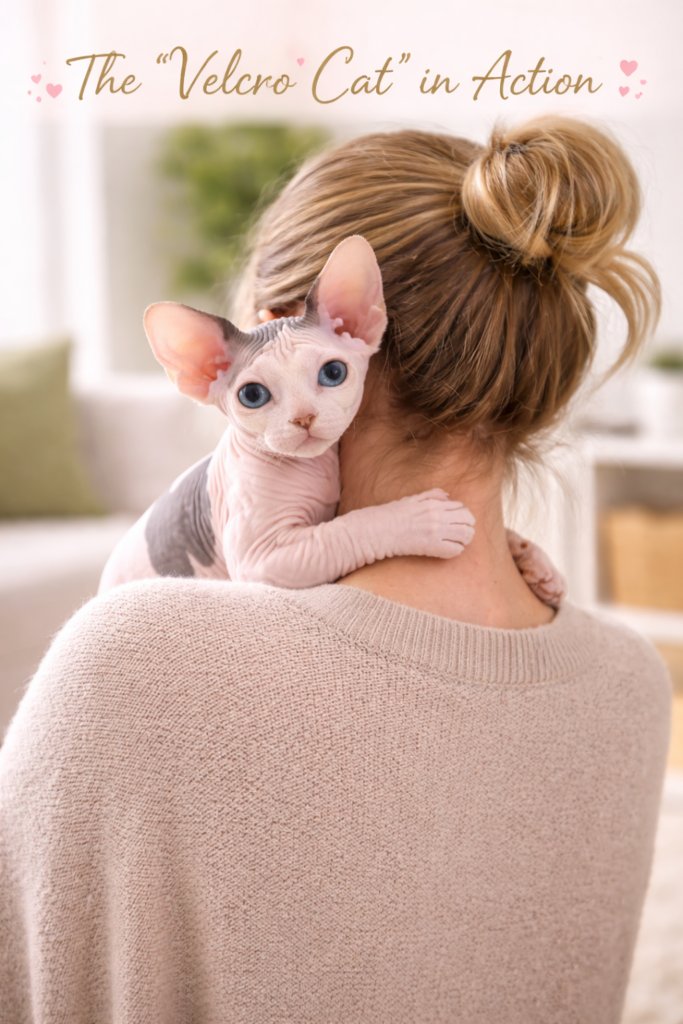
When deciding on a new feline companion, the most striking choice you will face is Sphynx vs. other breeds. While traditional cats offer fluffy coats and variety, the hairless Sphynx provides a unique, high-interaction experience that furred breeds simply cannot match.
If you are wondering why choose a hairless cat, this guide explores the personality, lifestyle, and hygiene differences that set these “velcro cats” apart.
1. The Personality Difference: Sphynx vs. Other Breeds
One of the biggest differences in the debate is temperament. While many furred cats are famously independent, the Sphynx is often described as ‘part dog and part child.’ In fact, they are exceptionally social. Because they thrive on physical touch, they will follow you from room to room. Consequently, they have earned the nickname ‘velcro cats.
- Social Intelligence: Sphynx cats are exceptionally social. Unlike many breeds that may hide when guests arrive, a Sphynx will likely be the first to greet them at the door.
- Constant Companionship: They are known as “shadow cats” because they thrive on physical touch and will follow you from room to room.
2. Shedding and Hygiene: Comparing the Sphynx vs. Other Breeds
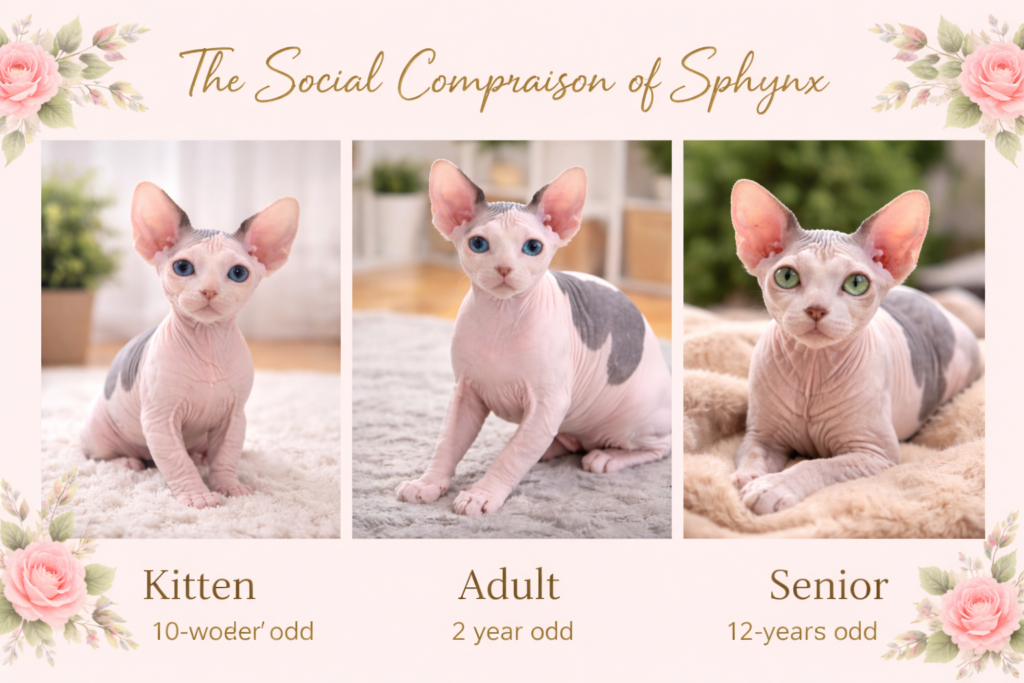
The most obvious reason to choose a hairless cat is the lack of fur. For many owners, this is a lifestyle game-changer. Furthermore, you can say goodbye to lint rollers. In addition to clean furniture, the lack of shedding means less dander is spread throughout your home. Therefore, it is a significant benefit for mild allergy sufferers.
- No Fur on Furniture: You can say goodbye to lint rollers and constant vacuuming. Your black clothes and velvet sofas will remain fur-free.
- Allergy Management: While no cat is truly hypoallergenic, many find the lack of airborne fur easier to manage. For a deeper look into how feline allergens work, the Asthma and Allergy Foundation of America provides excellent resources on managing pet dander in the home.
3. Grooming Requirements: Why Choose a Hairless Cat Over Furred Breeds?
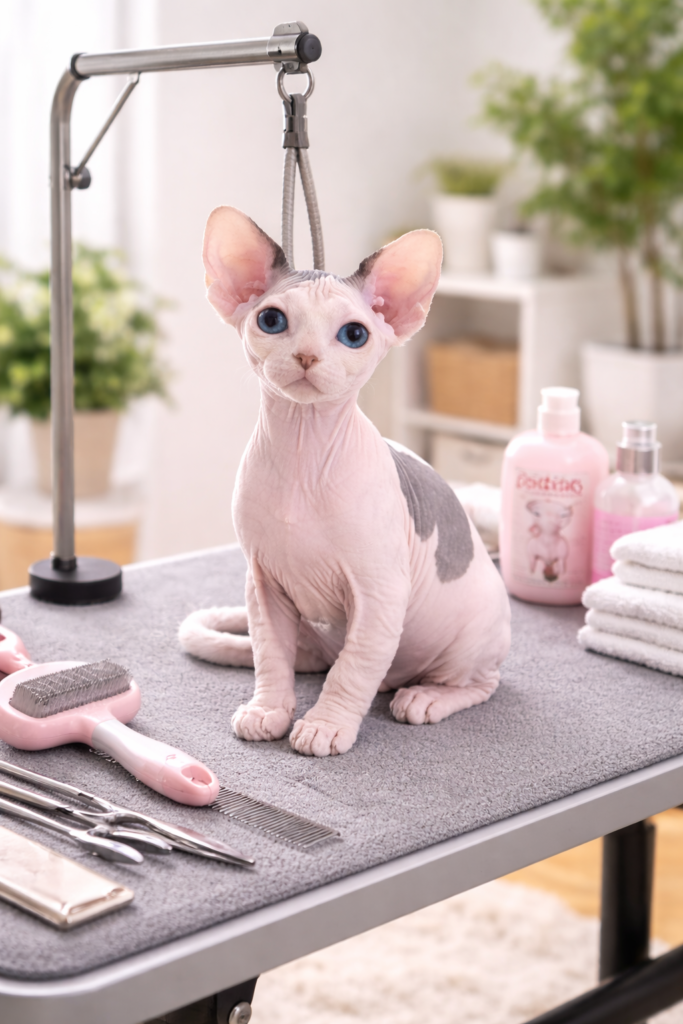
It is a common myth that ‘no hair means no grooming.’ However, the reality is that grooming is actually more intensive. While a Persian needs daily brushing, a Sphynx needs a weekly bath. Moreover, this routine often creates a deeper bond between the owner and the cat. Proper skin care is essential for hairless breeds. For professional guidance on feline dermatology and maintaining a healthy skin barrier, Veterinary Partner offers vet-verified advice on skin health.
| Feature | Furred Breeds | Sphynx Cats |
|---|---|---|
| Shedding | High to Moderate | None |
| Bathing | Rarely | Weekly |
| Skin Care | Minimal | High (Oil Management) |
| Ear Cleaning | Monthly | Weekly |
While a Persian needs daily brushing to prevent mats, a Sphynx needs a weekly bath to remove natural skin oils. This routine often creates a deeper bond between the owner and the cat.
4. Temperature and Cuddling
Because they lack fur, Sphynx cats have a unique thermoregulation process and a higher basal metabolic rate. You can learn more about how cats maintain their body temperature at the Cornell Feline Health Center.
5. Is the “Majestic” Lifestyle Right for You?
At Moonlit Majesty Sphynx, we specialize in breeding for both health and that signature “velcro” personality. Choosing a hairless cat is a commitment to a more interactive, attentive pet-parent relationship.
If you value a cat that participates in your daily life rather than just observing it, the choice is clear. You can see how our previous families have adjusted to this unique lifestyle on our Reviews Page.
Conclusion
The battle of Sphynx vs. other breeds ultimately comes down to what you want in a companion. If you want a low-shedding, highly intelligent, and deeply affectionate partner, the hairless path is incredibly rewarding.
Are you ready to see our latest litters? View our Available Kittens or learn about our HCM and health testing to ensure you’re choosing a healthy, happy companion.